
Bats
Bats in your attic aren’t just unsettling — their guano is one of the most dangerous biological hazards found in homes.
A colony of 100 bats produces roughly 2,500 droppings per night — and that guano grows the Histoplasma fungus, a lung-disease pathogen endemic to Kansas City. We exclude colonies humanely, seal every entry point, and clean up the contamination. No bats harmed. No bats back.

Request your free consultation
Free phone consultations and estimates — we typically respond within 30 minutes during business hours
Every request is personally reviewed
by a real member of our Olathe office team
Error: Contact form not found.
🔒 Your information is secure. No spam, no obligation, no automated calls.
✓ Humane exclusion only — we never harm bats. One-way doors allow safe exit. Every entry point sealed permanently after the colony vacates.
How we remove bats — humanely and permanently
Bat exclusion is specialized work that requires species knowledge, meticulous sealing, and patience. Here’s exactly what happens when you hire Midway.
01
Comprehensive inspection — roof to foundation
We inspect your entire roofline, soffits, fascia, gable vents, ridge cap, roof vents, chimney, and every seam where building materials meet. Inside, we inspect the attic for guano accumulation, urine staining, colony size estimation, and species identification. We check for rub marks, entry points, and secondary access areas. You receive a complete assessment of what we find, how large the colony is, and what the exclusion plan will involve.
02
One-way exclusion device installation
We install professional one-way exclusion devices at every active entry point. These devices allow bats to exit the structure naturally during their evening flight but physically prevent re-entry. The devices are species-appropriate — sized and positioned based on whether you have Big Brown Bats (larger gaps) or Little Brown Bats (smaller gaps). Bats leave voluntarily, unharmed, over 3-7 nights.
03
Secondary entry point pre-sealing
Before installing exclusion devices, we seal every secondary and potential entry point — gaps that bats aren’t currently using but could switch to if their primary entry is blocked. This is the step most companies skip, and it’s the reason DIY exclusion fails. If you seal the main entry without sealing alternatives, bats simply move to the next gap. We identify and close every option before funneling the colony through exclusion devices.
04
Final sealing — permanent closure
After confirming the colony has fully vacated (typically 7-10 days after device installation), we remove the exclusion devices and permanently seal the primary entry points. Every seal uses professional-grade materials — caulk, foam, metal flashing, and hardware cloth as appropriate for each gap type. The result is a completely sealed structure with zero bat-accessible openings. Bats cannot return.
05
Guano cleanup & sanitization
We remove accumulated guano from attic surfaces using proper PPE and containment protocols — Histoplasma spores are dangerous and must be handled professionally. We apply DSV™ hospital-grade disinfectant to sanitize all affected surfaces, killing fungal spores, bacteria, and viruses. Bat urine staining is treated with Bac-Azap® deodorizer to eliminate the persistent ammonia odor.
06
Attic restoration when needed
For colonies that have been present for extended periods — heavy guano accumulation, saturated insulation, extensive urine damage — we offer complete attic restoration: full insulation removal, DSV™ sanitization, Bac-Azap® deodorization, and TAP® pest control insulation replacement. Not every bat job requires this, and we assess honestly. When it’s needed, we handle it completely.
Humane exclusion devices — how they work
We use three types of one-way exclusion devices depending on the entry point size, location, and bat species. Every method allows bats to leave safely without harm.
One-way doors
Clear plastic or mesh tubes attached at an angle over entry points. Bats crawl through the tube to exit but cannot navigate back up the angle to re-enter. The most effective device for defined entry points like gaps in soffits, around roof vents, and where siding meets trim. Bats exit naturally during their evening flight and simply cannot find their way back through the angled tube.
Exclusion netting
Fine polypropylene mesh draped over larger areas — wide soffit gaps, long ridge cap seams, or sections of deteriorated fascia. The netting hangs loosely at the bottom, creating a one-way flap. Bats push out through the bottom but cannot push back in from outside. Netting is essential for areas where a single tube device can’t cover the full extent of the entry zone.
Cone exclusion devices
Smooth-walled cone or funnel devices installed over round entry points — PVC pipe gaps, uncapped conduits, and circular vent openings. Bats slide down and out through the smooth interior but cannot grip the surface to climb back up. Effective for entry points where tube devices aren’t practical due to the opening shape.
Why bats in your attic are more dangerous than you realize
Most homeowners think bats are just creepy. The reality is far more serious. Bat guano and bat presence create medically documented health hazards that affect your family every day the colony remains — even after the bats leave.
Histoplasmosis — Kansas City is ground zero
Bat guano grows Histoplasma capsulatum — a fungus whose microscopic spores become airborne and enter your HVAC system. Breathing these spores causes histoplasmosis: flu-like symptoms, chronic lung infection, and pneumonia. In immunocompromised individuals — children, elderly, anyone with asthma or respiratory conditions — it can be fatal. The Kansas City metro sits in the Ohio and Mississippi River valleys’ overlap zone — the highest endemic area for histoplasmosis in the entire United States. This isn’t a theoretical risk. It’s a documented, regional health concern.
Rabies — bats are the #1 source in the U.S.
Bats are responsible for more human rabies cases in the United States than any other animal. Rabies is 100% fatal once symptoms appear — there is no cure, only prevention. A bat scratch or bite can be so small you don’t notice it. The CDC recommends that anyone who wakes up in a room with a bat, or finds a bat near an unattended child, should seek immediate medical evaluation — even without visible bite marks. A bat colony in your attic means rabies-carrying animals are inches from your living space.
Bat bugs migrate into your living space
Bat bugs are parasites nearly identical to bed bugs that live on bats and in their roosting areas. When bats are removed — or even when a colony grows large enough — bat bugs migrate downward through wall cavities, electrical outlets, light fixtures, and HVAC vents into your bedrooms, living rooms, and furniture. They bite humans, cause itchy welts, and infest mattresses and upholstery. Many homeowners discover bat bugs before they discover the bat colony causing them.
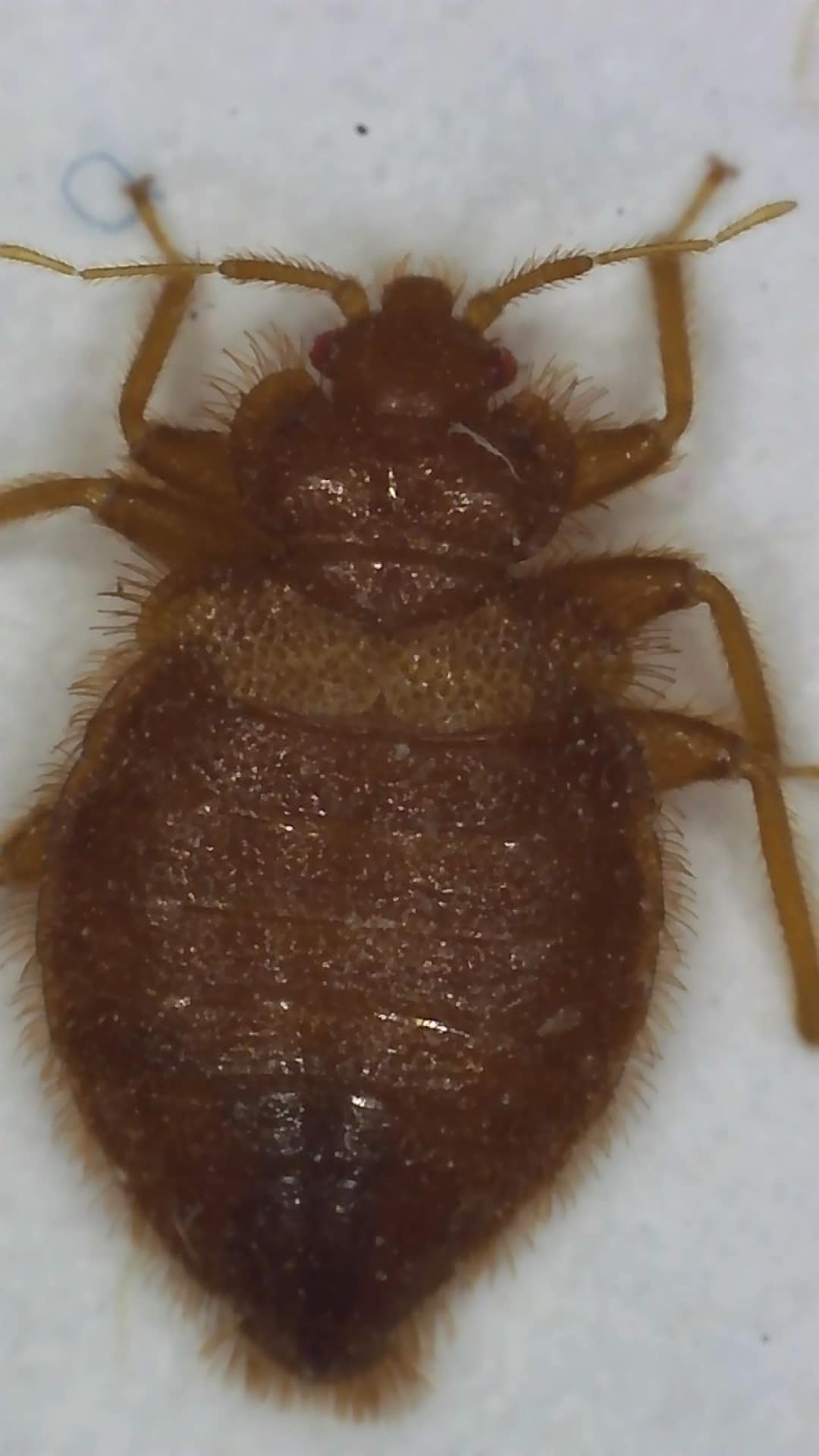
A bat bug pulled from an infested KC-area attic — easy to mistake for a bed bug.
Guano accumulation compounds daily
A single bat produces 20-30 droppings per night. A colony of 50 bats produces 1,000-1,500 droppings every single night. Over weeks and months, guano piles grow inches deep on top of attic insulation — crushing it, contaminating it, and creating the perfect warm, moist environment for Histoplasma fungus to flourish. The contamination doesn’t plateau — it accelerates. Every day the colony stays, the cleanup becomes more extensive and more expensive.
What we actually find in Kansas City attics
These are real photographs from bat inspections across the KC metro. This is what an active colony does to an attic — and why professional cleanup and sanitization aren’t optional.


Bat exclusion in under a minute
A quick look at how we get bats out of Kansas City attics and keep them out for good.
Bat species that roost in Kansas City homes
Three bat species commonly colonize residential structures in the KC metro. Each has different roosting patterns, colony sizes, and seasonal behaviors that affect our exclusion approach.
→
Big Brown Bat
The most common bat found in KC-area attics. Dark brown, 4-5 inch body with a 12-13 inch wingspan. Big Brown Bats form colonies of 20-75 individuals in attics, soffits, and wall voids. They’re year-round residents — unlike some species, they don’t migrate. They hibernate in attics during winter, which means they’re present in your home 365 days a year. They enter through gaps as small as ½ inch — roof vents, ridge caps, gaps where siding meets trim, and uncapped chimneys.
→
Little Brown Bat
Smaller than the Big Brown Bat — 3-4 inch body with a 9-11 inch wingspan. Glossy brown fur. Little Brown Bats form larger colonies — sometimes 100+ individuals in a single attic. They’re more dependent on water sources and are commonly found in homes near creeks, ponds, and the KC-area river corridors. Their smaller size means they can enter through even tinier gaps — a crack ⅜ inch wide is sufficient. Colonies produce massive amounts of guano relative to their size.
→
Evening Bat
Medium-sized, dark brown bat common in the KC metro during warmer months. Evening Bats form maternity colonies of 25-75 females in attics and soffits during spring and summer to birth and raise young. They migrate south in fall, but their guano and urine contamination remains year-round. Evening Bat maternity colonies are particularly active (and noisy) from May through August when pups are being raised. Exclusion timing must account for flightless pups.
How to know if bats are living in your home
Bats are nocturnal and roost in tight, dark spaces — you may not see them directly. But the signs they leave are unmistakable once you know what to look for.
Bats flying around your roofline at dusk
Stand outside at sunset and watch your roofline for 30 minutes. If bats are roosting in your home, you’ll see them emerge from gaps in the soffits, ridge cap, roof vents, or where siding meets trim. They exit one at a time in a fluttering, swooping flight pattern. Seeing 3-5 bats emerge from the same spot at dusk is confirmation of a colony. Seeing more than 10 means the colony is substantial.
Dark staining around entry points
Bats leave a distinctive dark, oily stain — called “rub marks” — around the gaps they use to enter and exit. The stain comes from body oils transferred as they squeeze through tight openings repeatedly. Look for dark brown or black smudges around roof vents, soffit gaps, ridge cap seams, and where the chimney meets the roofline. These stains are permanent and won’t wash off — they’re a definitive indicator of bat activity.
Guano on exterior walls or ground
Bat droppings accumulate below entry points — on siding, windowsills, porches, and the ground beneath the roofline. Bat guano looks similar to mouse droppings but is slightly larger, segmented, and crumbles to a fine, glittery powder when crushed (insect exoskeletons). If you see small, dark, rice-sized droppings concentrated below a specific area of your roofline, bats are roosting directly above.
Scratching and squeaking sounds
Bats produce high-pitched squeaking and chittering sounds — especially audible in the evening as the colony prepares to fly. You may also hear scratching or rustling inside wall voids and soffits. The sounds are different from mice (lighter, higher-pitched) and squirrels (heavier, during daytime). Bat sounds concentrate at dusk and dawn when the colony is most active.
Strong ammonia odor
Large bat colonies produce a powerful ammonia-like odor from accumulated urine and guano. The smell permeates through ceiling drywall and becomes noticeable in upper-floor rooms — especially bedrooms directly below the roosting area. If you notice a persistent musty or ammonia smell from your attic or upper ceiling that you can’t explain, a bat colony is a likely cause.
A bat found inside your living space
Finding a bat flying in your bedroom, living room, or hallway means bats are roosting inside your structure — not just passing through. Bats inside living spaces have either found a pathway from the attic through wall cavities, or entered through an open window or door. A single bat sighting indoors warrants a full attic and roofline inspection. If anyone was sleeping in the room with the bat, contact your physician immediately regarding rabies exposure protocols.
Why DIY bat removal always fails — and often makes things worse
We get calls every season from homeowners who tried to handle bats themselves. Here’s what goes wrong.
✗
Sealing the entry while bats are still inside
The most common DIY mistake. You see bats leaving at dusk, wait until they’re out, and seal the hole. Problem: not all bats leave every night. The ones trapped inside will find new ways into your living space — through wall cavities, light fixtures, bathroom vents, and gaps around pipes. You’ll go from bats in your attic to bats in your bedroom.
✗
Missing secondary entry points
You seal the obvious gap but miss the four other spots bats could use. The colony shifts to an alternative entry the next night. Now you’ve spent money on sealing materials and the bats are still in your attic — just using a different door. Professional exclusion seals ALL secondary entry points first, then installs exclusion devices at the primary entry.
✗
Disturbing guano without protection
Entering a bat-contaminated attic without proper respiratory protection (HEPA respirator minimum) exposes you to Histoplasma spores. Sweeping or disturbing guano launches millions of microscopic fungal spores into the air. A dust mask from the hardware store is not adequate. Histoplasmosis is a serious lung disease — and you can contract it from a single unprotected exposure in a contaminated attic.
Why KC-area homes are high-risk for bat colonies
The Kansas City metro’s geography, climate, and housing stock create ideal conditions for bat roosting. Understanding why helps you assess your own risk.
Creek corridors are bat highways
Indian Creek, Tomahawk Creek, Turkey Creek, Mill Creek, and the Kansas and Missouri Rivers create insect-rich corridors that bats use as nightly foraging routes. Homes within a few blocks of any waterway in the KC metro are at elevated risk because bats forage along these corridors and roost in the nearest available structure. Overland Park, Shawnee, Lenexa, and Olathe all have creek systems running through residential areas.
KC’s housing stock has gaps
Homes built in the 1960s-90s — which make up a large portion of Johnson County’s housing — have construction details that create bat entry points: ridge cap gaps, soffit-to-fascia seams, gable vent screens that have deteriorated, and gaps where different building materials meet. Newer homes aren’t immune — builder-grade roof vents and soffit panels often have gaps sufficient for bat entry. Bats need only ½ inch.
Histoplasmosis endemic zone
The Kansas City metro sits in the overlap of the Ohio and Mississippi River valleys — the highest endemic area for Histoplasma capsulatum in the United States. This fungus thrives in bat guano and bird droppings. The combination of large bat populations, residential roosting, and endemic histoplasmosis makes bat colony removal in KC a genuine public health issue — not just a wildlife nuisance.
The price of waiting — in real dollars
Bat colonies don’t shrink. Guano doesn’t stop accumulating. Every night you wait, the cleanup becomes more extensive and more expensive.
Small colony, minimal guano, few entry points. Exclusion + sealing + basic cleanup. Most affordable outcome.
Growing colony, significant guano buildup, multiple entry points established, insulation contamination beginning. Exclusion + sealing + guano removal + sanitization. Cost has doubled.
Large colony, inches of guano, saturated insulation, heavy urine staining, strong ammonia odor, possible bat bug migration into living space. Exclusion + sealing + full attic restoration. Cost has tripled or more.
Massive colony, structural staining, ceiling damage from urine saturation, histoplasmosis-level fungal growth, bat bugs established in living space, extensive insulation destruction. Full exclusion + complete attic restoration + potential ceiling repairs. The most expensive outcome — and it was entirely preventable.
The estimate is free. The consultation is free. The only thing that costs money is waiting.

Dear Kansas City Homeowner,
“Bat work requires patience, precision, and timing that most pest companies don’t have the training or willingness to do right.”
My name is Luis Gonzalez. I own Midway Pest Management. Bat exclusion is one of the most specialized services we offer — and one of the most commonly done wrong by other companies. I’ve been called to fix bat jobs where companies sealed entry points with bats still inside, performed exclusion during maternity season with pups in the attic, or missed secondary entries that the colony shifted to the next day.
Proper bat exclusion takes time. The inspection has to be thorough — every gap checked, every stain noted, every potential entry identified. The exclusion devices have to be installed correctly and monitored over 7-10 days. The final sealing has to be complete — one missed gap and the colony returns next spring. And the guano cleanup has to be done safely with proper respiratory protection because Histoplasma spores are genuinely dangerous.
We do this work the right way because cutting corners with bats doesn’t just mean a callback — it means bats in someone’s bedroom, histoplasmosis exposure, or dead pups in an attic. The stakes are too high to rush it.
My commitment on every bat job
Thorough inspection, legally compliant humane exclusion, complete entry point sealing, professional guano cleanup, and attic restoration when needed. If bats re-enter through any entry point we sealed, we come back at no charge. We do this work right because there’s no acceptable alternative.
If you suspect bats in your home — don’t wait, and don’t try to handle it yourself. Call us.
What KC-area homeowners say about our bat work
“Have really been pleased with the quality of pest control they provide. Want to specifically call out Roberto who has been working with us on a bat problem we have had lately. Very informed and detailed in his work.”
“They came out to remove a bat in my house. Not only did they come in a very timely manner, they caught and removed it within minutes. Highly professional and friendly!”
“Luis was fantastic. Knowledgeable, professional, and took the time to explain everything clearly. Highly recommend.”
“Roberto was able to find the source of our issue within 30 minutes — one that had evaded several other companies for over a decade!”
“The service we received from Midway was truly outstanding! Efficient and they kept a close eye on our situation. Luis was so kind and available whenever we needed help.”
“Extremely efficient and reliable work! Am so grateful for Luis!”
Bat exclusion FAQ
Thorough answers to every question Kansas City homeowners ask about bats.
What should I do if I find a bat in my house?
Stay calm. Close doors to confine the bat to one room. Keep children and pets away. Turn off ceiling fans. Do not try to catch it — bats can carry rabies. Call us immediately. If anyone was sleeping in the room with the bat or had physical contact, call your physician first about rabies post-exposure evaluation, then call us for inspection and exclusion.
How do bats get inside my home?
Through gaps as small as ½ inch — ridge cap seams, soffit-to-fascia gaps, deteriorated gable vent screens, gaps around roof vents, uncapped chimneys, and where different building materials meet. Bats don’t create holes — they exploit existing construction gaps. Many of these gaps are invisible from ground level and only detectable during a close roofline inspection.
How long does the exclusion process take?
From start to finish, typically 2-3 weeks. Initial inspection and secondary sealing: 1 day. Exclusion device monitoring period: 7-10 days (allowing the full colony to vacate). Final sealing: 1 day. Guano cleanup: 1-2 days depending on accumulation. The monitoring period is essential — rushing final sealing before all bats have exited traps individuals inside.
Will bats come back after exclusion?
Not if every entry point is properly sealed. Bats have excellent homing instincts and will attempt to return to the same roosting site the following spring. If any gap remains unsealed — even one — they’ll find it. Our process seals every secondary entry point before exclusion and every primary entry point after. Complete sealing is what makes the difference between a one-time solution and a recurring problem.
Is bat guano really dangerous?
Yes — medically documented. Bat guano grows Histoplasma capsulatum, a fungus whose airborne spores cause histoplasmosis — a lung disease that can range from flu-like symptoms to chronic infection to fatal pneumonia in immunocompromised individuals. Kansas City is in the highest endemic zone for this disease in the U.S. Guano cleanup without proper respiratory protection is genuinely dangerous.
Do I need attic restoration after bat removal?
It depends on how long the colony was present and how large it was. A small colony present for one season may only need guano removal and spot sanitization. A large colony present for years with inches of guano accumulation, saturated insulation, and heavy urine staining will likely need full insulation removal and replacement. We assess honestly and only recommend restoration when contamination warrants it.
How much does bat exclusion cost?
Cost varies based on colony size, number of entry points, roofline complexity, and whether guano cleanup or attic restoration is needed. We provide a detailed estimate after inspection so you know exactly what to expect. There are no hidden fees and no surprise charges. Call 913-820-9737 for a free consultation.
Why is Midway different from other bat removal companies?
Three reasons: thoroughness, legal compliance, and follow-through. We seal every secondary entry before installing exclusion devices (most companies don’t). We time our work around maternity season restrictions (some companies ignore this). And we include guano cleanup and sanitization as part of the complete service (many companies exclude bats and walk away, leaving you with a contaminated attic). We solve the entire problem — not just the visible part.
Bat problems often lead to these
Bat infestations create secondary problems that we also handle completely.
Attic restoration
Heavy guano contamination requires complete insulation removal, DSV™ sanitization, Bac-Azap® deodorization, and TAP® insulation replacement.
Mice & rat control
Bat entry points are also mouse entry points. If bats were getting in, mice likely are too. A rodent inspection after bat exclusion is smart.
Bird control
Starlings and sparrows use the same entry points as bats. Excluding one species without addressing the other leaves your attic vulnerable.
Every night that colony stays,
your cleanup bill grows and your family’s risk increases.
Free estimate. Free consultation. Humane exclusion. Complete sealing. Professional guano cleanup. From a local, owner-operated team that does bat work the right way. The only cost is waiting.