
Raccoon Hub Page
Raccoons in your attic are causing the most dangerous contamination of any wildlife.
Raccoons don’t just make noise — they rip open soffits, tear through vents, crush insulation, and leave behind waste that carries raccoon roundworm — a parasite that can cause brain damage in children. This isn’t a nuisance. It’s an emergency. Midway Pest Management humanely evicts raccoons from structures, seals off all entry points to prevent re-entry, and restores your attic to a safe, clean condition.
✓ Humane eviction, permanent entry point sealing, and contamination cleanup — one team handles the entire problem from start to finish.
Why raccoons cause more damage than any other wildlife
Raccoons are the largest animals that commonly invade KC-area attics — and their size translates directly into the scale of damage and contamination they leave behind.
They don’t find entry points — they create them
Unlike mice that squeeze through existing gaps, raccoons use their strength and dexterity to rip open soffits, tear off vent covers, peel back fascia boards, and pull apart roofing material. A raccoon can peel aluminum soffit like a can opener. The entry points they create are large — 4-6 inches or more — and cause immediate structural damage. We seal these openings with heavy-duty materials to prevent re-entry, and if the damage requires carpentry or roofing work, we’ll advise you on what’s needed.
Their waste is the most dangerous
Raccoon feces carry Baylisascaris procyonis — raccoon roundworm — a parasite whose eggs survive in attic materials for years. If accidentally inhaled or ingested, larvae migrate through the body and can cause severe brain damage, blindness, and organ failure. Children are at highest risk. The CDC considers raccoon roundworm a serious public health concern. This is the primary reason raccoon waste requires professional handling — never DIY.
They crush and destroy insulation
Raccoons weigh 15-40 pounds. They don’t tunnel through insulation like mice — they flatten it. Every path they walk compresses insulation permanently, destroying its R-value. They designate specific “latrine” areas where feces pile up and soak through insulation to the ceiling drywall below. A single raccoon can destroy hundreds of square feet of insulation in weeks.
Everything raccoons damage inside your home
Raccoons are strong, heavy, and destructive. Here’s the complete picture of what they do to Kansas City attics.
Structural roof & soffit damage
Raccoons tear through soffit panels, rip off vent covers, peel back drip edge, and damage roof decking to create and maintain entry points. They use their front paws like hands — pulling, twisting, and prying materials apart. Repair often requires new soffit panels, fascia boards, vent covers, and sometimes roof patching. This isn’t a seal-up job — it’s construction repair.
Latrine contamination
Raccoons are the only attic wildlife that designate specific latrine areas — concentrated zones where they repeatedly defecate. These latrines soak through insulation and can stain the drywall ceiling below. The feces contain raccoon roundworm eggs that remain viable for years. Latrine areas require complete removal of contaminated material and professional sanitization.
Insulation destruction
A 25-pound raccoon walking through blown-in insulation flattens it completely along every path. Nesting areas are compressed into dense mats. Combined with urine saturation and fecal contamination, raccoon-damaged insulation loses all thermal value and becomes a health hazard. Full insulation replacement is common after raccoon infestations.
Wiring & duct damage
Raccoons chew and claw through electrical wiring, HVAC ductwork, and plumbing lines. Their strength means they can tear through flexible duct that squirrels and mice can’t damage. Chewed wiring is a fire hazard. Torn ductwork leaks conditioned air into the attic and allows contaminated attic air into your living space.
Ceiling damage & water intrusion
Heavy raccoons can crack drywall ceilings by walking on joists and insulation. Their entry points in the roof allow rain and moisture intrusion. Urine saturation from above causes ceiling staining and eventual drywall failure. In severe cases, raccoon-damaged ceilings need replacement — not just paint.
Babies complicate everything
Female raccoons seek attics specifically to birth and raise young — typically 3-5 kits born in spring. Baby raccoons can’t leave on their own — exclusion must be timed so the mother can take her young with her when she exits. If entry points are sealed while babies are still inside, the mother will cause extensive additional damage trying to get back in. Timing and expertise matter enormously.
Diseases carried by raccoons in Kansas City
Raccoon waste is among the most dangerous animal contamination found in residential settings. These aren’t hypothetical risks — they’re documented, medically recognized diseases.
Baylisascaris (Raccoon Roundworm)
The most dangerous raccoon-borne parasite. Eggs in raccoon feces survive in attic materials for years — even after raccoons leave. If accidentally inhaled or ingested, larvae migrate through the body causing severe brain damage, blindness, and organ failure. Children are at highest risk because they’re more likely to touch contaminated surfaces. This parasite is the reason raccoon waste should never be cleaned without professional equipment and protocols.
Rabies
Raccoons are one of the top rabies vectors in the United States. Rabies is 100% fatal once symptoms appear. While primarily transmitted through bites, viral particles can be present in saliva and waste. Any direct contact with raccoon waste — including during DIY cleanup — carries risk. If you or anyone in your household has had direct contact with a raccoon or its waste, consult a physician immediately.
Leptospirosis & Giardia
Raccoon urine carries Leptospira bacteria that contaminate insulation and attic surfaces, remaining infectious for weeks. Leptospirosis causes kidney failure and liver damage. Giardia — a parasitic infection found in raccoon feces — causes severe gastrointestinal illness. Both pathogens can become airborne through your HVAC system and affect your family without direct contact.
What happens when you delay raccoon eviction
Every week a raccoon stays in your attic, the damage compounds. Here’s what the timeline looks like in real dollars.
Entry point damage, initial nesting, first latrine established. Repair cost: $500-$1,500 for entry point repair and basic cleanup.
Latrine areas growing, insulation compressed along travel paths, possible second entry point created. Repair cost: $1,500-$4,000 including partial insulation replacement.
Widespread insulation destruction, heavy contamination, possible wiring damage, ceiling staining from urine. If babies are born, multiply everything. Repair cost: $4,000-$10,000+ including full attic restoration.
Structural damage to roof decking, multiple entry points, entire attic contaminated, ceiling replacement needed, possible electrical rewiring. Repair cost: $10,000-$20,000+. Professional eviction and repair today costs a fraction of this.
Why raccoon damage is in a different league
All attic wildlife causes problems. But raccoons operate on a completely different scale than mice, squirrels, or bats.
Raccoons vs. mice
Mice contaminate insulation with droppings and urine — but they weigh half an ounce. Raccoons weigh 15-40 pounds. They don’t just contaminate insulation — they flatten it completely. Mice squeeze through existing gaps. Raccoons rip open your roof. Mouse cleanup is often localized. Raccoon cleanup frequently requires full attic restoration. The scale of damage is 10x or more.
Raccoons vs. squirrels
Squirrels chew entry holes and damage wiring — serious but localized. Raccoons create massive entry points that compromise your roof structure. Squirrel waste is problematic but manageable. Raccoon latrines contain roundworm eggs that survive for years and can cause brain damage. Squirrel exclusion is straightforward. Raccoon exclusion must account for babies and timing.
Raccoons vs. bats
Bat guano carries histoplasmosis — a serious fungal disease. But bats are small and their guano accumulates on top of insulation. Raccoons crush insulation completely and their waste carries roundworm — a parasite that causes neurological damage. Bats enter through small gaps. Raccoons create structural openings that let in rain, other wildlife, and compromise your roof’s integrity.
4 things homeowners do wrong with raccoons
Every one of these mistakes makes the problem worse and costs you more money. We see them regularly.
Sealing the entry before they’re out
If a mother raccoon is sealed out with her babies still inside your attic, she will cause catastrophic damage trying to get back in — ripping through new soffits, tearing off shingles, and creating multiple new entry points. If babies are trapped inside, you’ll have severe odor and fly problems for weeks. Never seal an entry point until you’ve confirmed all raccoons — including babies — have vacated.
Using mothballs or ammonia
Mothballs are a registered pesticide — using them as a raccoon deterrent is illegal under EPA regulations and doesn’t work. Ammonia-soaked rags are ineffective against a 30-pound raccoon that’s already established a den. Both create toxic fumes in your attic that are harmful to your family. Neither will make a raccoon leave.
DIY cleanup without proper PPE
Raccoon waste contains roundworm eggs that are microscopic and become airborne when disturbed. Cleaning raccoon latrines without a HEPA respirator, Tyvek suit, and proper containment protocols exposes you directly to a parasite that can cause brain damage. A dust mask from the hardware store is not adequate protection. This is genuinely dangerous — not an overstatement.
Waiting through breeding season
Homeowners who hear raccoons in January often wait until spring hoping they’ll leave on their own. They don’t. Instead, the female gives birth to 3-5 babies in March-April, and now you have a family of 4-6 raccoons causing 4-6x the damage. By summer the babies are mobile and actively destroying your attic alongside the mother. Early action before babies arrive saves thousands.
Our raccoon eviction & restoration process
Raccoon work is more complex than any other wildlife service. We don’t trap and relocate — we evict raccoons from the structure, confirm vacancy, seal every entry point permanently, and clean up the contamination. One team handles everything.
Inspection & damage assessment
We inspect your entire roofline for entry points (raccoon entry is obvious — large, torn openings), assess attic damage, locate nesting and latrine areas, and determine if babies are present. We identify whether raccoons are denning inside a structure (attic, soffit, chimney) or under an exterior structure (deck, stoop, shed). The approach depends on the situation.
Humane eviction & exclusion
We install one-way exclusion devices at active entry points that allow raccoons to exit the structure but prevent re-entry. We then monitor the den opening over several days to confirm all raccoons — including babies — have vacated. During breeding season, we time the exclusion carefully so the mother can take her young with her. No raccoons are trapped or relocated off-site. They leave on their own terms through the one-way device and move on naturally.
Entry point sealing & exclusion
Once vacancy is confirmed, we permanently seal every entry point using heavy-duty, raccoon-proof materials — metal flashing, heavy-gauge hardware cloth, commercial-grade sealant, and reinforced vent covers. Raccoons are strong, so every seal must be built to withstand their strength. If a raccoon created structural damage that requires carpentry or roofing work beyond sealing, we’ll document it and advise you on the right contractor for that repair. Our job is making sure no raccoon can get back in.
Latrine removal & sanitization
Raccoon latrine areas are biohazards that require professional handling. We remove all fecal material, contaminated insulation, and nesting debris using proper PPE and containment protocols. We apply DSV™ hospital-grade disinfectant to sanitize all affected surfaces. This is never a DIY job — raccoon roundworm eggs are microscopic and survive for years.
Damage inspection & documentation
With the attic cleaned, we inspect all wiring for chew and claw damage, check HVAC ductwork for tears, assess plumbing lines, and document all structural damage. You receive a complete report of findings. For extensive wiring damage, we recommend a licensed electrician for repair.
Attic restoration when needed
Raccoon damage frequently requires full attic restoration — complete insulation removal, DSV™ sanitization, Bac-Azap® deodorization, and TAP® pest control insulation replacement. Raccoons cause the most severe attic contamination of any wildlife — restoration is more common after raccoon infestations than any other animal. We assess honestly and recommend only what’s genuinely necessary.
Not in your attic? We can still help.
Raccoons don’t always invade attics. They also den under decks, stoops, sheds, and porches. Here’s how we handle those situations.
Inspection & assessment
We inspect the area to identify the den location, entry points, and whether babies are present. We assess whether the opening is something we can seal or whether it requires work from a contractor or handyman. Either way, you’ll know exactly what needs to happen.
Monitoring & confirmation
We monitor the den opening over several days to confirm the raccoons have left. Raccoons are creatures of habit — they leave to forage nightly and return. By monitoring the opening with indicators, we can confirm when the den is vacant and safe to seal without trapping anyone inside.
Sealing & prevention
Once vacancy is confirmed, we seal the opening with heavy-duty materials if it’s within our scope. If the sealing requires carpentry or construction work, we’ll advise you on exactly what needs to be done and recommend the right approach. We also advise on reducing attractants — securing trash, removing pet food, and eliminating easy access points around your property.
Raccoon activity patterns in Kansas City
Raccoon calls follow a predictable seasonal pattern. Understanding the timing helps you recognize what’s happening and respond appropriately.
Late winter — den seeking
January through March, pregnant females actively seek warm, secure denning sites for birthing. Your attic is the ideal den — warm, sheltered, and safe from predators. This is when most new raccoon infestations begin. You’ll hear heavy thumping and scratching — much louder than mice or squirrels — often at night.
Spring — babies in your attic
March through May, females give birth to 3-5 kits. Baby raccoons are vocal — you’ll hear chirping, crying, and chattering sounds. The mother comes and goes through the entry point daily to forage. This is the most delicate time for exclusion — we time our one-way devices so the mother can take her babies with her when she exits. Never seal a mother out during this period.
Summer & fall — growing families
Young raccoons become mobile by summer and start exploring the attic — dramatically increasing noise, damage, and contamination. By fall, juveniles are nearly adult-sized. If the family hasn’t been evicted, you now have 4-6 full-sized raccoons using your attic. Damage accumulates rapidly from this point.
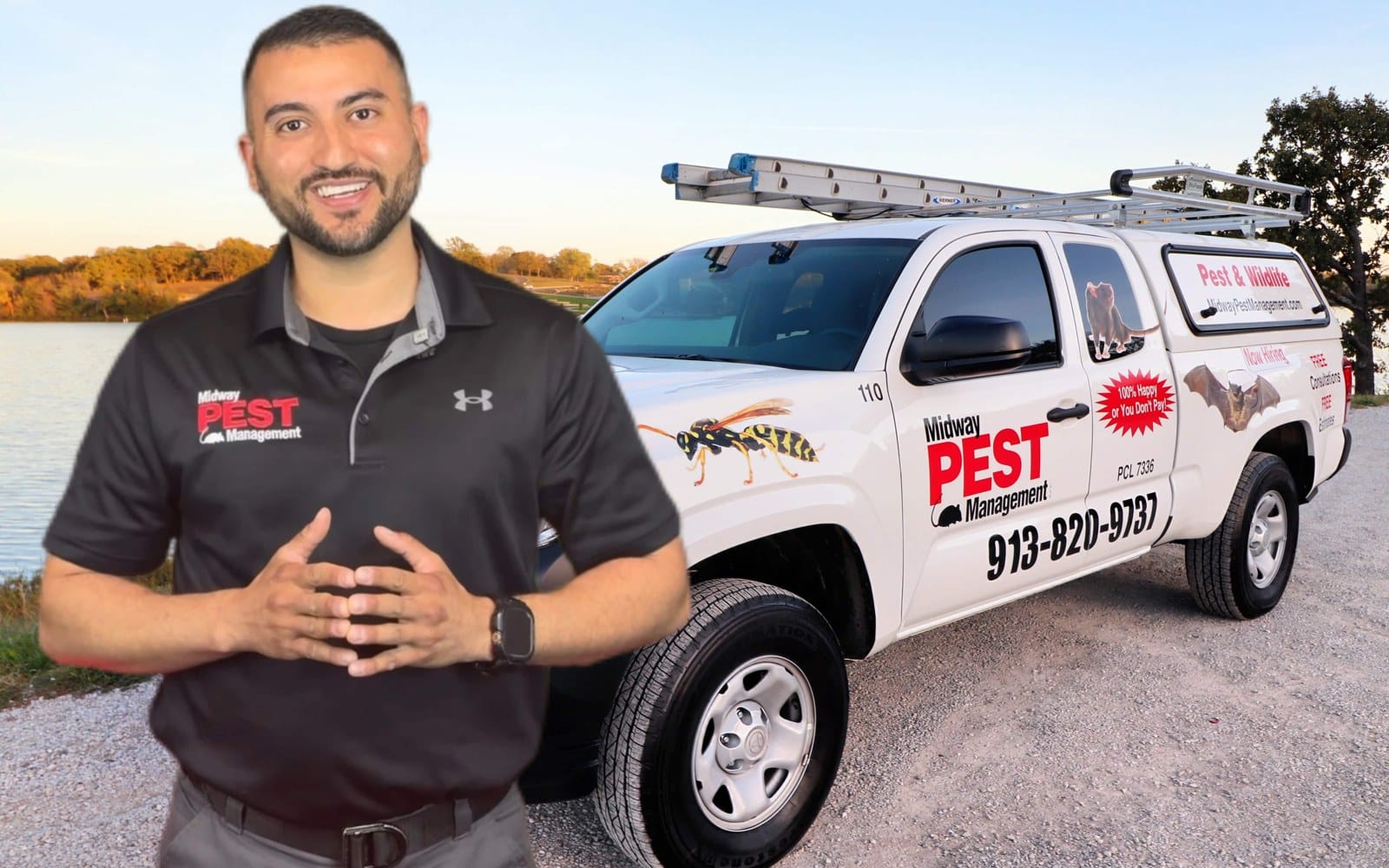
Dear Kansas City Homeowner,
“Raccoons cause the most severe attic damage of any wildlife — and their waste is genuinely dangerous to your family.“
My name is Luis Gonzalez. I own Midway Pest Management. Raccoon calls are the most complex wildlife jobs we handle — because everything about raccoons is bigger. Bigger entry points that need heavy-duty sealing. Bigger contamination (raccoon roundworm is a serious parasite). Bigger damage (they crush insulation just by walking on it). And babies that must be handled with patience and proper timing.
Our approach is humane exclusion — not trapping and relocating. We install one-way devices, monitor the den over several days to confirm every raccoon has left, then permanently seal the entry points and clean up the contamination. Most pest companies don’t want to deal with raccoons because the work is harder and takes longer. We handle the entire job — eviction, entry point sealing, latrine cleanup, sanitization, and attic restoration if needed. One company, one process, one team that knows what they’re doing.
If you’re hearing heavy thumping in your attic at night — especially between January and May — call us immediately. That’s almost certainly a raccoon, and every day you wait, the damage and contamination get worse.
My commitment on every raccoon job
Humane eviction and exclusion, permanent entry point sealing, latrine cleanup and sanitization, full damage assessment, and attic restoration when needed. We handle the entire problem from first call to finished attic.
What KC-area homeowners say about our wildlife work
“Have really been pleased with the quality of pest control they provide. Want to specifically call out Roberto who has been working with us. Very informed and detailed in his work.”
“Roberto was able to find the source of our issue within 30 minutes — one that had evaded several other companies for over a decade!”
“The service we received from Midway was truly outstanding! Efficient and they kept a close eye on our situation. Luis was so kind and available whenever we needed help.”
“Luis was fantastic. Knowledgeable, professional, and took the time to explain everything clearly.”
“Luis and his team were very informative and quick throughout the entire process. Same day service. Highly recommend!”
“Extremely efficient and reliable work! Am so grateful for Luis!”
Raccoon exclusion FAQ
Thorough answers to the questions Kansas City homeowners ask most about raccoons.
How do I know if it’s a raccoon and not a squirrel?
Raccoons are much louder and heavier than squirrels. You’ll hear loud thumping, heavy walking, and vocal sounds (chittering, growling, crying from babies) — usually at night. Squirrels are active during the day and make lighter, faster sounds. Raccoon entry points are large and visibly damaged — torn soffits, ripped vents, pulled-apart fascia. If it sounds like a person walking in your attic at night, it’s probably a raccoon.
What about baby raccoons in my attic?
If a female raccoon entered your attic between January and May, there are likely babies. We never seal a mother out with babies inside — that creates far worse problems. We time our one-way exclusion devices so the mother exits, retrieves her young, and moves on with them naturally. We monitor the den over several days to confirm the entire family has vacated before sealing.
Is raccoon waste really that dangerous?
Yes. Raccoon feces carry Baylisascaris (raccoon roundworm) — a parasite the CDC considers a serious public health concern. Eggs survive in attic materials for years and can cause brain damage, blindness, and organ failure if accidentally inhaled or ingested. Children are at highest risk. Raccoon waste should never be cleaned without professional PPE, containment, and sanitization protocols.
Do you trap and relocate raccoons?
No. We use humane one-way exclusion — the raccoon exits the structure through a one-way device and cannot re-enter. We monitor over several days to confirm vacancy, then permanently seal the entry points. This approach is more effective than trapping because it addresses the structure itself. A trapped and relocated raccoon is replaced by the next raccoon that finds the same open entry point. Our method closes the entry permanently.
What if the raccoon is under my deck or stoop?
We inspect the den location, monitor the opening over several days to confirm vacancy, and seal it with heavy-duty materials if it’s within our scope. If sealing requires carpentry or construction, we advise you on exactly what needs to be done. We also help you reduce attractants around your property to discourage future denning.
Will my attic need restoration after raccoons?
In most cases, yes — at least partial restoration. Raccoons cause the most severe attic contamination of any wildlife due to their size, their designated latrines, and the volume of waste they produce. We assess the damage honestly and recommend the appropriate level — from targeted latrine cleanup to full insulation removal and replacement. Not every job needs full restoration, and we’ll tell you the truth about yours.
How do raccoons get into my attic?
Raccoons are strong enough to rip open soffits, tear off vent covers, peel back fascia, and damage roofing to create entry points. They target weak spots — rotting wood, loose soffit panels, unscreened roof vents, and areas where different building materials meet. They can also enter through uncapped chimneys and damaged gable vents. Our inspection identifies every active and potential entry point.
How do I prevent raccoons from coming back?
Professional sealing with heavy-duty, raccoon-proof materials at every entry point. Raccoons are strong — patch jobs with wood or foam won’t hold. We use metal flashing, heavy-gauge hardware cloth, and commercial-grade vent covers. Trimming tree branches within 6 feet of your roof helps. Securing trash cans and removing pet food from outdoors reduces attraction to your property.
Raccoons in your attic or under your deck?
This is urgent. Call us today.
Humane eviction and exclusion, permanent entry point sealing, professional contamination cleanup, and attic restoration. One team handles everything. Free consultation.